Welcome to Wound-Care

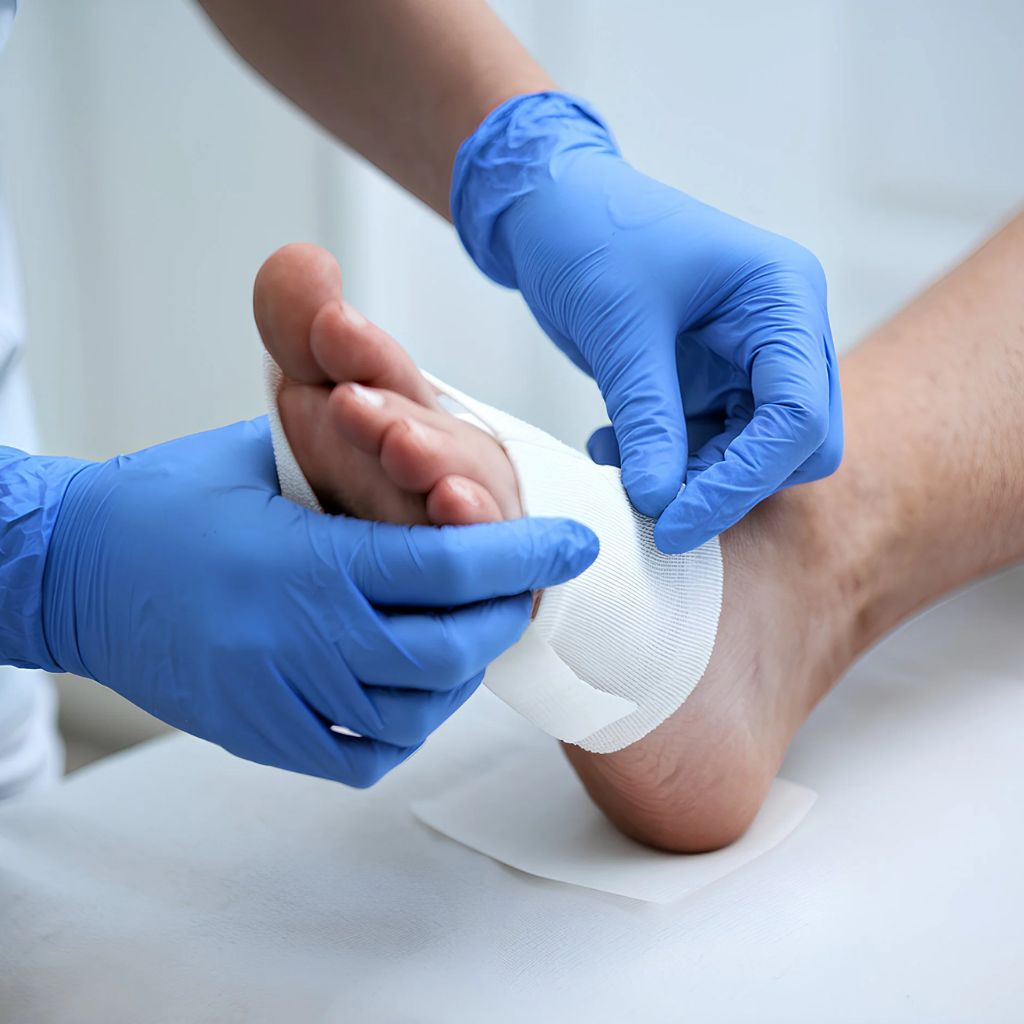
Best Dressings for Diabetic Foot Ulcers
5 May 2026
By
J Ghoniya - Pharmacist
Diabetic foot ulcers (DFUs) are one of the most serious complications of diabetes. Slow healing, reduced circulation, and a higher risk of infection make choosing the right dressing essential.
In this expert guide, we break down the best dressings for diabetic foot ulcers, when to use them, and how to support faster healing.
What Is a Diabetic Foot Ulcer?
A diabetic foot ulcer is an open sore or wound, usually on the bottom of the foot, caused by:
• Poor circulation
• Nerve damage (neuropathy)
• Pressure or injury
Without proper care, these wounds can become infected and lead to serious complications.
Best Dressings for Diabetic Foot Ulcers
1. Foam Dressings (Best for Moderate to Heavy Exudate)
Foam dressings are highly absorbent and help maintain a moist healing environment.
✅ Benefits:
• Absorb excess wound fluid
• Protect against pressure and friction
• Reduce risk of maceration
✔ Recommended products:
Explore foam dressings here:
https://wound-care.co.uk/instantsearch/result/?q=foam+dressings
2. Alginate Dressings (Best for Highly Exuding Wounds)
Made from seaweed-derived fibres, alginate dressings turn into a gel when in contact with wound fluid.
✅ Benefits:
• Excellent for heavy exudate
• Helps stop minor bleeding
• Promotes faster healing
✔ Shop alginate options:
https://wound-care.co.uk/instantsearch/result/?q=alginate-dressings
3. Hydrocolloid Dressings (Best for Low to Moderate Exudate)
These dressings form a gel-like barrier that keeps the wound moist and protected.
✅ Benefits:
• Supports autolytic debridement
• Shields wound from bacteria
• Comfortable and flexible
✔ Browse hydrocolloids:
https://wound-care.co.uk/instantsearch/result/?q=hydrocolloid-dressings
4. Antimicrobial Dressings (Best for Infection Risk)
These dressings contain agents like silver or iodine to reduce bacterial load.
✅ Benefits:
• Prevent and manage infection
• Ideal for high-risk diabetic wounds
• Help control odour
✔ View antimicrobial dressings:
https://wound-care.co.uk/instantsearch/result/?q=antimicrobial-dressings
5. Hydrogel Dressings (Best for Dry or Necrotic Wounds)
Hydrogels donate moisture to dry wounds, helping break down dead tissue.
✅ Benefits:
• Rehydrates dry wounds
• Supports natural healing
• Soothes pain
✔ Shop hydrogels:
https://wound-care.co.uk/instantsearch/result/?q=hydrogel-dressings
6. Non-Adherent Dressings (Best for Fragile Skin)
These dressings protect the wound without sticking to it—ideal for sensitive diabetic skin.
✅ Benefits:
• Minimises trauma during dressing changes
• Reduces pain
• Suitable for shallow ulcers
✔ Explore non-adherent dressings:
https://wound-care.co.uk/instantsearch/result/?q=non-adherent-dressings
How to Choose the Right Dressing
Selecting the correct dressing depends on:
• Exudate level (dry, moderate, heavy)
• Infection risk
• Wound depth and tissue type
• Skin condition around the wound
-- Tip: Many diabetic ulcers require a combination of dressings over time.
Important: Offloading Is Essential
Even the best dressing won’t work if pressure isn’t relieved.
Use:
• Special footwear
• Offloading boots
• Custom orthotics
This is critical for healing diabetic foot ulcers.
When to Seek Medical Help
Get professional care immediately if:
• The wound shows signs of infection
• There is black or dead tissue
• The ulcer isn’t improving
• You have fever or increasing pain
✅ Best Practice Wound Care Routine
1. Clean the wound with sterile solution
2. Apply appropriate dressing
3. Change dressings regularly
4. Monitor for infection
5. Reduce pressure on the foot
❓ FAQ
What is the best dressing for diabetic foot ulcers?
The best dressing depends on the wound. Foam and alginate dressings are ideal for heavily exuding ulcers, while hydrogel dressings work best for dry wounds.
________________________________________
Should diabetic foot ulcers be kept moist or dry?
They should be kept moist but not wet, as a moist environment promotes faster healing.
________________________________________
How often should dressings be changed?
Typically every 1–3 days, depending on exudate levels and dressing type.
________________________________________
Are antimicrobial dressings necessary?
They are recommended if there is a high risk of infection or early signs of infection.
________________________________________
Medical Disclaimer
This content is for informational purposes only and does not replace professional medical advice. Always consult a healthcare provider for diagnosis and treatment of diabetic foot ulcers.