Welcome to Wound-Care

Cellulitis in Wound Care: Symptoms, Treatment and Management
11 Oct 2026
By
J Ghoniya - Pharmacist
What Is Cellulitis?
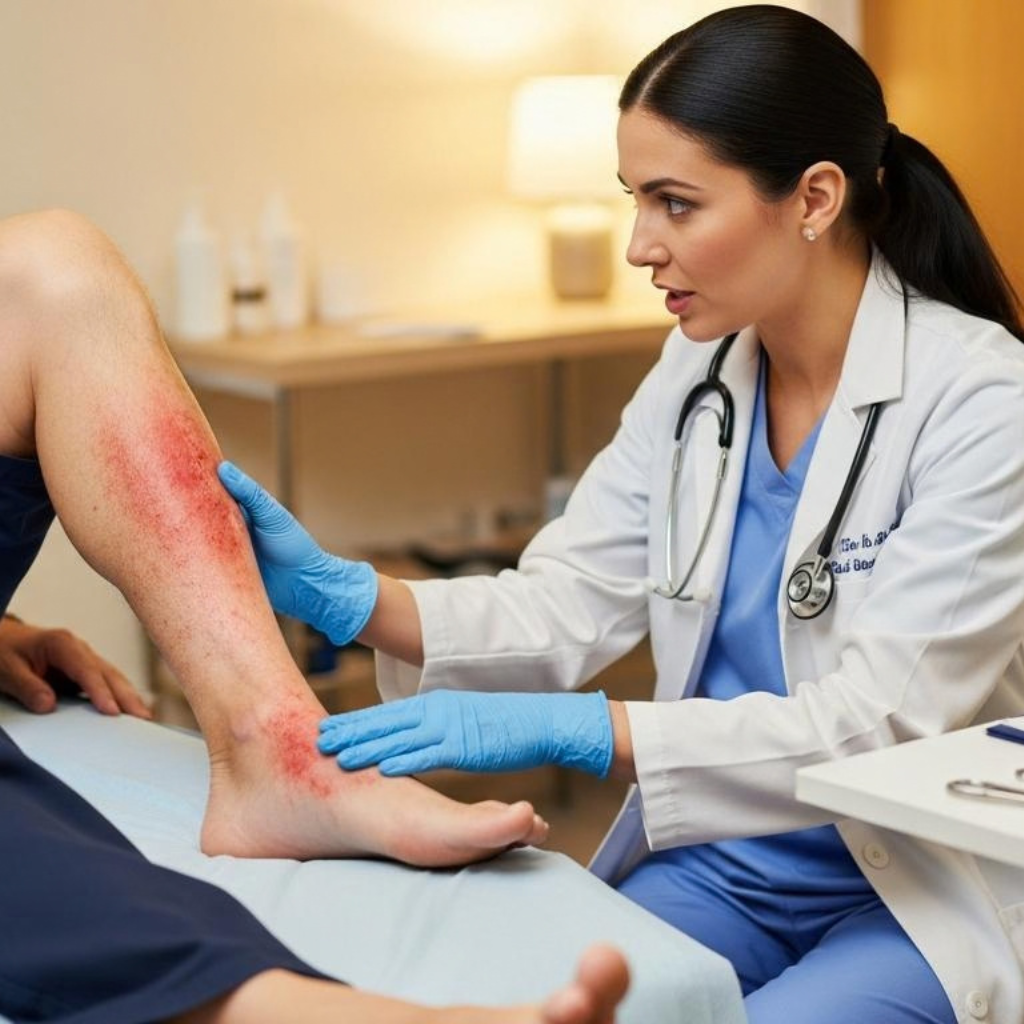
Cellulitis is a bacterial infection of the skin and underlying tissues. It often develops when bacteria enter through broken skin, including leg ulcers, diabetic foot wounds, surgical wounds or minor injuries.
Early recognition is essential to prevent complications and ensure prompt treatment.
Common Signs and Symptoms
Wound care professionals should look for:
• Redness or discolouration spreading around a wound.
• Increased skin temperature and swelling.
• Tenderness or worsening pain.
• Rapidly spreading inflammation.
• Fever, chills or feeling generally unwell.
Redness may be less obvious on darker skin tones, so warmth, swelling and changes in skin appearance should also be assessed.
Important: Suspected cellulitis requires prompt medical assessment. Rapid deterioration, severe pain or signs of sepsis require urgent escalation.
How Should Wound Care Professionals Manage Cellulitis?
Effective management combines timely medical treatment with appropriate wound care.
1. Assess the wound: Document wound size, exudate, surrounding skin changes, pain and signs of deterioration.
2. Escalate promptly: Cellulitis generally requires systemic antibiotics prescribed by an appropriate healthcare professional. Dressings alone cannot treat the infection.
3. Select suitable dressings: Choose products according to wound characteristics, exudate levels and skin condition.
4. Monitor progress: Seek reassessment if symptoms worsen or improvement has not started within two to three days of starting antibiotics.
5. Address underlying risks: Consider diabetes, poor circulation, oedema and fragile skin when planning ongoing care.
Recommended Wound Care Products
The following products may support appropriate wound management when clinically indicated. They do not replace antibiotic treatment for cellulitis.
Prontosan Wound Irrigation Solution and Gel
Used for wound cleansing and wound-bed preparation in appropriate wounds.
Explore Prontosan products
Foam Dressings
Suitable options for managing exudate and protecting selected wounds and surrounding skin.
Explore wound dressings
Antimicrobial Dressings
Certain antimicrobial dressings may be appropriate for selected wounds following clinical assessment. They are not a substitute for systemic antibiotics in cellulitis.
Browse the dressing range
Can Cellulitis Be Prevented?
Wound care professionals can help reduce risk by:
• Maintaining skin integrity and protecting fragile skin.
• Managing oedema and underlying skin conditions.
• Providing appropriate wound cleansing and dressing care.
• Educating patients about early warning signs.
• Encouraging prompt assessment of new redness, warmth or swelling.
Frequently Asked Questions About Cellulitis in Wound Care
Can cellulitis heal without antibiotics?
Bacterial cellulitis generally requires systemic antibiotic treatment. Dressings and topical products alone are not an appropriate substitute. Suspected cellulitis should be assessed promptly by a qualified healthcare professional.
Is cellulitis the same as an infected wound?
No. A wound infection may initially be localised to the wound, whereas cellulitis involves infection of the surrounding skin and underlying soft tissues. A wound can be infected without cellulitis, and cellulitis can occur without an obvious open wound.
Should a wound be covered when cellulitis is present?
When an underlying wound is present, an appropriate dressing may help protect the wound, manage exudate and reduce further skin damage. Dressing choice depends on the clinical assessment. Covering the wound does not replace the need for medical assessment and antibiotics where indicated.
Are silver dressings effective against cellulitis?
Silver dressings may have a role in managing selected wounds with an appropriate clinical indication. However, they do not replace systemic antibiotic treatment for cellulitis. Their use should be based on wound assessment and relevant clinical guidance.
How quickly should cellulitis improve after antibiotics?
Patients should seek reassessment if symptoms worsen rapidly or significantly, or if improvement has not started within two to three days. Skin changes may take longer to resolve completely, even when treatment is working.
Can cellulitis recur?
Yes. Recurrence is possible, particularly when risk factors such as chronic oedema, venous insufficiency, skin conditions or repeated skin breakdown remain. Addressing these factors is an important part of long-term prevention.
Should wound care professionals swab every wound with suspected cellulitis?
No. Swabbing is not routinely indicated in every case. NICE recommends considering microbiological testing in specific circumstances, including certain broken-skin wounds and cases requiring reassessment. Follow local protocols and interpret results alongside the clinical presentation.
Conclusion
Cellulitis requires early recognition, prompt medical assessment and appropriate treatment. Wound care professionals play an important role in identifying deterioration, supporting wound healing and protecting surrounding skin.
Clinical references
1. National Institute for Health and Care Excellence (NICE). Cellulitis and erysipelas: antimicrobial prescribing (NG141).
2. NICE. Recommendations for managing cellulitis and erysipelas.
Clinical disclaimer: This article is intended for healthcare education and general information. It does not replace clinical judgement, local protocols or individual medical assessment. Treatment decisions should be made by appropriately qualified healthcare professionals in accordance with current guidance.